Make a Song with ChatGPT: Lyrics, Prompts & Next Steps
Use ChatGPT to develop a song idea, compare choruses, and revise original lyrics. Then choose a recording or music workflow with clear costs and limits.
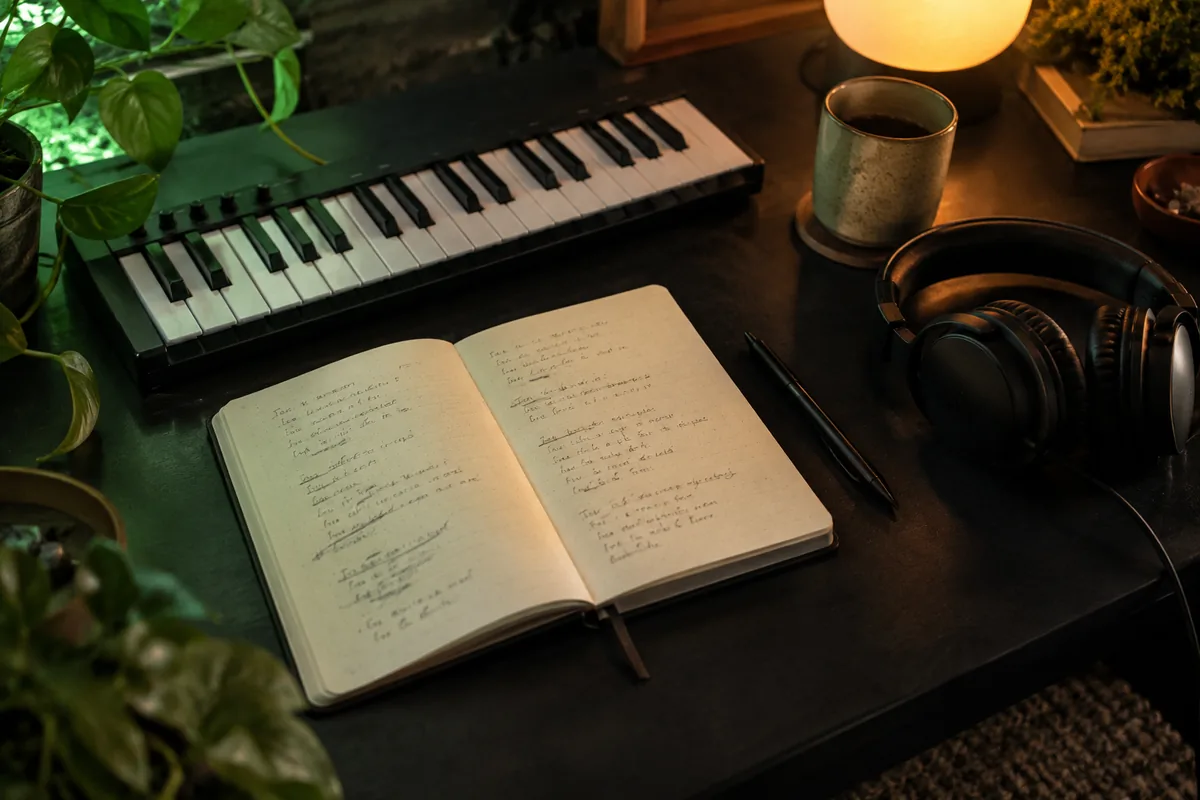
To make a song with ChatGPT, use it for a clear writing task: develop a theme, compare chorus ideas, revise lines, or prepare a lyric sheet. Then sing and record the song yourself, collaborate with a musician, or take the edited words to a music-generation service. A useful text draft and a finished audio recording are different deliverables.
Editorial method: SongLab checked official OpenAI prompting documentation on November 3, 2026. The prompts and lyric illustrations here were created for this guide; they are not reported outputs from a paid experiment or a test of a connected music app.
Tell ChatGPT which part of the song you need
“Make me a song” can mean write words, suggest a structure, provide a musical brief, or produce a performance. Start by naming the result you want to inspect. OpenAI's ChatGPT prompting guide recommends stating the goal, relevant context, desired output, and useful boundaries. You do not need special technical syntax.
For an original song thanking a friend, decide who is speaking, what the friend did, and how direct you want the language to be. Specific material helps you judge the reply. It also gives you something worth preserving when the wording changes.
You can use a nickname or a fictional detail for an early exercise. Only include personal information you actually want in the working material and eventual recording.
Start with a brief rather than a demand for perfection
Here is an original prompt you can adapt:
Help me write an original acoustic-pop song for a friend who helped me move into my first home. The key scene is carrying a crooked bookshelf up three flights of stairs. The feeling is gratitude with gentle humor. First give me two different chorus ideas, each four short lines. Keep the speaker consistent, avoid generic lifelong promises, and do not copy an existing song or name an artist to imitate. Explain the difference between the two directions. Ask only if an essential detail is missing.
The output is small enough to compare. One chorus might focus on the physical work; the other might treat making room as an emotional idea. You can choose the meaning before asking for a complete song.
This is an exercise in making decisions, not a magic prompt that guarantees a strong lyric. Read the response as a proposal. Reject a line when it sounds unlike your narrator, even if it has a neat rhyme.
Give feedback about a line, not just its mood
Suppose an original draft says “You always make the hard days fine.” It expresses gratitude but does not show your friendship. You might revise toward “You held the shelf while I found the screws.” That line has an action and belongs to the moving-day scene.
Ask for a bounded revision:
Keep the crooked-bookshelf scene. Rewrite only the last two lines of the chorus. Make the language easier to say aloud, and preserve the idea that helping with an ordinary task made the new room feel like home. Give three alternatives without changing the first two lines.
Now you can compare actual choices. “More emotional” may invite a louder version of the same abstraction; a concrete constraint tells the collaborator what needs to survive.
For more independent practice, the lyric-writing workshop explains image, viewpoint, rhythm, and rhyme without depending on any particular chat service.
Keep story, sound, and output format separate
OpenAI's prompt engineering guidance describes supplying relevant context and clear instructions. For songwriting, you can use three simple headings in your request:
- Story: narrator, listener, scene, and central thought.
- Sound intention: broad style, a few instrument roles, and vocal delivery.
- Output: a lyric sheet, alternate hook, critique, or short music brief.
Avoid asking one response to supply perfect lyrics, an exact melody, a finished mix, and a release plan at the same time. A text description of a guitar part is not the sound of that guitar. Decide which next artifact you can actually review.
If you want a title before writing the lyric, the song name generator offers browser-only title combinations without generation credits. It is a separate tool, not a ChatGPT model or a complete lyric-analysis service.
Test the lyric with your voice
Read it conversationally. Mark the words you naturally emphasize, then speak it over a steady pulse. Sing any melody that occurs, even if it uses only a few notes. Record a short voice memo so the rhythm is not lost.
If a line requires a strange pronunciation to fit, rewrite it before polishing the rhyme. Equal syllable counts do not guarantee identical stress. Ask for alternatives that preserve the same thought, then choose by singing them rather than relying only on a written critique.
When using a chat response for advice about musical facts, verify any detail that matters. An attractive explanation or chord suggestion should still be checked in the actual song.
Choose how the words become audio
| Route | What you prepare | What you still need to assess |
|---|---|---|
| Sing it yourself | Lyric sheet and a rough melody | Performance, recording level, phrasing |
| Work with a musician | Lyric, brief, and clear feedback | Arrangement, interpretation, revisions |
| Use a music service | Edited words and a musical direction | Pronunciation, structure, sound, and provider limits |
This tutorial uses ChatGPT as a writing collaborator. If your account exposes a connected music app, check that app's availability, permissions, costs, and output separately. Do not assume every ordinary chat response includes a downloadable sung file.
For a direct lyric-to-performance path, Lyrics to Song accepts an edited lyric sheet. On SongLab, music generation requires login and 100 credits per generation. Anonymous lyric drafts have a shared daily allowance. Those costs are separate from any ChatGPT plan or connected app.
Make the final draft yours
Check that the narrator remains consistent, each verse adds something, and no line invents a memory that did not happen. Keep the details you want the recipient to recognize and remove stock phrases you would never say.
You can bring the revised idea to SongLab when you want to hear a rendition, or keep writing and recording yourself. Save both the earlier draft and the version you chose so future changes remain intentional.
ChatGPT songwriting questions
Is a ChatGPT song maker free?
Available account access and usage limits can vary. This guide does not promise a fixed free allowance. Writing a lyric and generating a finished audio file may involve different tools and costs.
Can ChatGPT make a song sound like a specific singer?
This workflow does not offer voice cloning. Describe general performance qualities and use an original musical direction. A text style suggestion is not a licensed or consented copy of a person's voice.
Why does the lyric sound generic?
Give the writer a scene, a narrator, and an action that proves the feeling. Then revise the weakest line while keeping the useful details.
What should I copy into a music tool?
Keep the actual sung words in a labelled lyric sheet. Put instrumentation and delivery in the separate style or brief field the music tool provides, and review before submitting.