Songs for Kids: Make a Personal Song for Everyday Moments
Find original songs for kids for tidying, birthdays, mornings, feelings, and quiet evenings, with simple lyric examples and a practical adult review checklist.
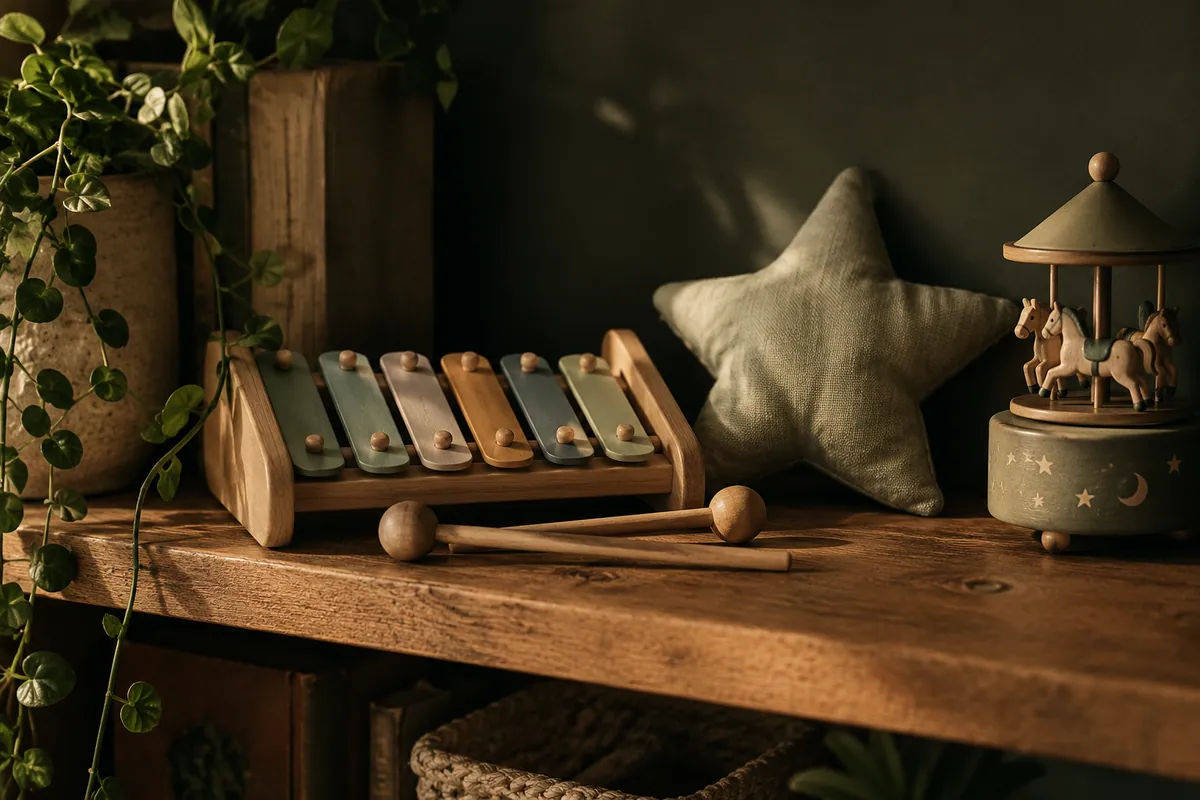
A personal song for kids works best when it has one clear moment, words the child recognizes, and a phrase that is easy to join. Start with a small everyday action—putting blocks away or choosing socks—then write a short repeated refrain around it. AI can suggest a draft; an adult should decide what is suitable and check the finished audio.
This is a creative activity guide, not a promise that a song will teach a skill, improve sleep, or change behavior. All examples below are original sketches you can adapt to your own household.
Choose the job of this particular song
Before choosing a style, decide when you will sing it. A clean up song for kids needs clear actions. A birthday song needs the child's name and something they enjoy. A quiet evening song may need very few words. One song does not have to do all three.
Write a three-part brief: the moment, one action, one friendly image. For example: “Putting toy animals away; place them in the basket; pretend the basket is their little house.” That gives the lyric somewhere concrete to go.
For words and structure, the nursery-rhyme workspace can help frame an idea. It uses the same music generation system as other music pages; a genre label does not mean a separate free music allowance.
Six useful ideas for everyday songs
A clean up song with one task at a time
Try a short verse for each kind of toy, with the same closing line. Keep the language descriptive rather than turning the song into a test:
Little fox goes in the den
Little bear goes home again
Blocks can rest beside the door
We made space upon the floor
If “den” is unfamiliar, use “box.” Familiar language matters more than preserving a rhyme. Sing the words slowly enough that the actions remain clear.
A wake up song with choices
A morning lyric can describe opening curtains and picking a shirt. Offer two ordinary options instead of insisting that every morning must feel cheerful. “Blue socks or the striped ones?” gives the child something specific to answer.
A prompt could be: “An original, gentle morning song about choosing between blue and striped socks, short repeated lines, acoustic guitar, friendly singing, no loud surprise at the opening.” Listen to the returned audio before playing it to anyone else.
A feelings song without right answers
Name a few feelings through simple situations: a missed turn, a hug, waiting at a door. Leave room for more than one feeling at once. Rather than “sadness goes away,” try “You can tell me how today feels.”
Ask an adult who knows the child to check whether the language suits their experience. The song is an invitation to talk, not an assessment of how a child ought to feel.
A birthday song with a name
Use the name once in the opening and once in the refrain, then add a detail: a favorite dinosaur, a paper crown, or the way they decorate pancakes. Too many personal facts can make a short song crowded.
The birthday song maker begins with free personalized lyrics within the daily allowance. A sung version requires login and 100 credits per music generation. Use a nickname if you prefer to keep the draft less identifying.
A quiet evening song
Choose a small image, such as a toy boat resting on a shelf. Keep the arrangement description gentle and avoid requesting a dramatic build. Do not promise that a sleeping song for kids will make a child fall asleep; simply offer something calm to listen to or sing together.
For example: “A short original lullaby about a toy boat waiting for tomorrow, few words, soft acoustic accompaniment, restrained voice, no sudden loud ending.” Review the result at a comfortable volume.
A routine song for toddlers
If writing a potty song for toddlers, use plain, neutral words chosen by the caregiver. Keep it brief and avoid jokes about a child's body, accidents, or comparisons with other children. You can celebrate asking for help without promising an outcome or making the lyric a reward condition.
The same approach works for putting on a coat: name the action, leave a pause, and let an adult adapt the words. This article does not offer toilet-training advice.
Turn a learning topic into a manageable lyric
An ABC song, colors song, or days-of-the-week song contains facts that need checking. Select one task for the first draft. For a colors song, start with three objects actually in the room instead of trying to list every shade.
For days of the week, read the final text in sequence and confirm every day appears exactly where intended. For counting, check each number and each repeated line. If an AI draft omits or repeats an item, correct it before generating audio. A catchy melody does not make incorrect words useful.
A practical prompt and revision example
A weak brief is “Make a fun educational song for my child.” It leaves the subject, language, and activity open.
A more useful brief is: “Write an original four-line chorus for tidying wooden blocks. Use the words box, shelf, and floor. Leave a pause after each action. Keep the tone friendly. Do not describe a child as good or bad.”
Then read it aloud. Change an awkward rhyme, shorten a long instruction, and remove a detail you would not normally say to the child. The lyric-writing guide offers a fuller revision process.
Check the song before sharing it
Listen from start to finish. Confirm the name is pronounced understandably, the lyrics remain appropriate, and the sound does not jump unexpectedly. Check the actual exported file as well as the on-screen words; a generated performance may phrase a line differently.
Keep drafts private when they include identifying details. If you choose to share a public song page, review the visible title, cover, and lyrics first. Sharing with relatives and publishing openly are different choices.
To turn a family idea into a draft, start with your story in SongLab. Anonymous lyric writing is available within the shared daily allowance; rendered music is a paid, logged-in step.
Questions about custom children's songs
Can I make the lyric without paying?
You can request an anonymous lyric draft within the daily allowance and edit the words. Music generation is separate and costs 100 credits per generation after login. Writing or singing your own version is also an option.
How long should the song be?
Start with a short refrain that fits the moment, then add a verse only if it contributes something useful. Test it by singing the actions. Do not fill extra time merely because the generator accepts a longer brief.
Can I use the same tune for every routine?
You can develop your own recurring melody and vary your own words. Notice whether a different pace suits a particular activity. This guide supplies original text examples rather than adaptations of commercial songs.
Does a generated song guarantee educational or calming results?
No. Treat it as creative material an adult can review and adapt, not a developmental, medical, or behavioral intervention.
Editorial approach: original activity and lyric examples prepared by SongLab. Product-flow descriptions checked against the site configuration on November 3, 2026; no paid generation was used for this guide.