How to Write Song Lyrics from a Title
Turn a song title into a clear chorus and original verses. Use a simple writing exercise to connect meaning, concrete scenes, and a singable hook.
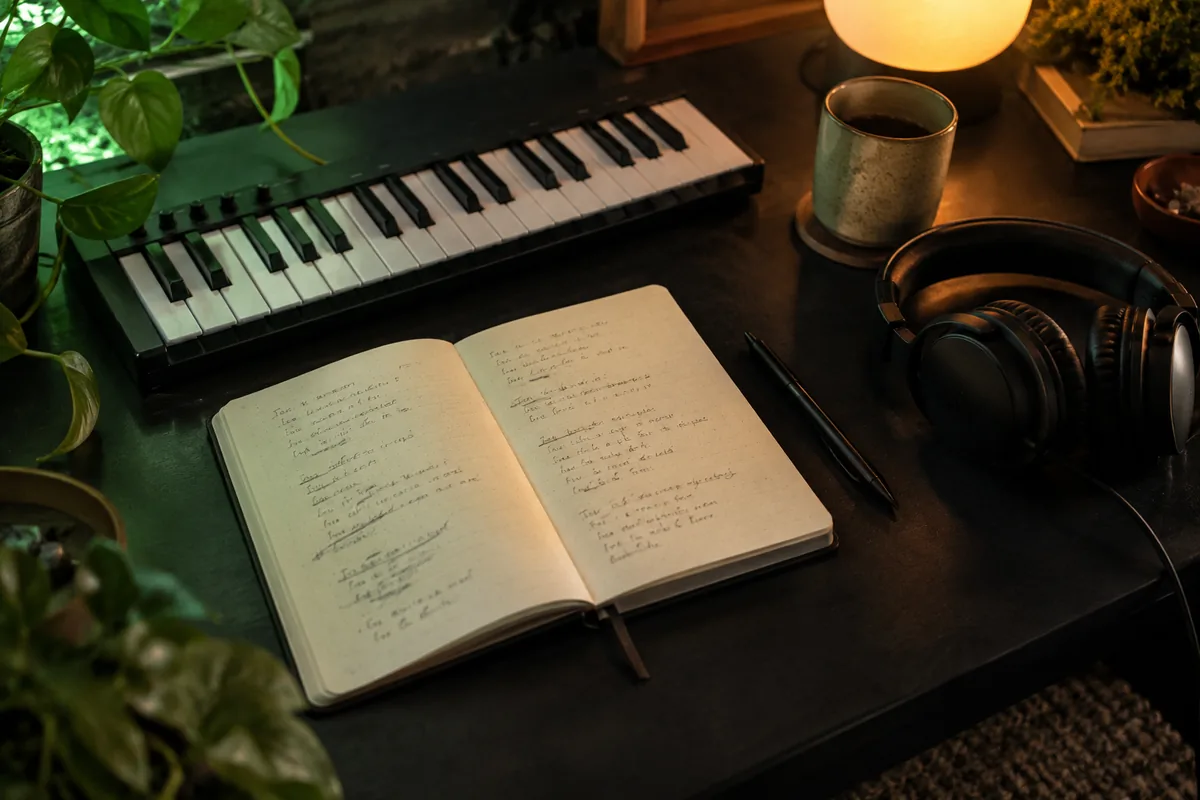
A good title can arrive before the rest of a song. Instead of waiting for the perfect first verse, use the title as a question: what does this phrase promise the listener?
Give the title three possible meanings
Take an original phrase such as “The Last Train Home.” It could describe a literal journey, a chance to repair a relationship, or the decision to leave an old life behind. Write one sentence for each possibility, then choose the meaning that feels most specific to you.
The point is to make a decision before chasing rhymes. A clear meaning gives every later line something to support. You can change the title later if the song discovers a better one.
Decide who is singing
Name the narrator and the person they are addressing. Are they speaking to someone, remembering a place, or thinking aloud? Keep that point of view consistent while you draft the first chorus.
For the train example, a narrator returning after years away suggests different details from someone travelling home every night. A ticket in a coat pocket, a familiar station announcement, or a light left on at home can turn an abstract feeling into a scene.
Write the chorus before filling every verse
Try a short chorus that returns to the title. State the emotional idea once, then find a simpler way to repeat or develop it. Read the lines aloud and notice where you naturally pause.
A hook does not need to explain the entire story. It needs to give the listener a phrase worth returning to. Save alternate versions instead of squeezing every useful line into one chorus.
Let the verses change something
Give the first verse a scene and the next verse a new discovery. If both verses say the same thing in different words, the song may feel static. Ask what the narrator understands at the end that they did not understand at the beginning.
Keep the details that belong to this story. Replace a broad phrase such as “I miss the past” with an image the narrator would actually notice.
Bring a clear outline to the workspace
Open the lyrics workspace with your title, narrator, chorus idea, and two scene notes. The current workspace helps prepare your own words and brief; automatic generation needs a connected service.
For musical direction, try the virtual piano or write a short brief in the song workspace. Keep the final lyric original, readable, and comfortable to say aloud.